How to Say “Be Quiet” in Spanish: Cállate, Cállense and Polite Ways
To tell one person to be quiet in Spanish, say ¡Cállate! (KAH-yah-teh). To a group, say ¡Cállense! (KAH-yehn-seh), or ¡Callaos! (kah-YAH-ohs) among friends in Spain. All three are orders and can sound rude, so the polite choices are Silencio, por favor (see-LEN-syoh, “quiet, please”) and ¿Puedes bajar la voz? (“can you lower your voice?”).
The adjective quiet is a different word depending on what is quiet: callado for a person who is not talking, tranquilo for a calm place or time, silencioso for something that makes no noise. Watch out for quieto: it looks like quiet but means still, not moving.
On this page: the phrases at a glance | cállate and its forms | polite requests | the verb callarse | quiet as an adjective | everyday phrases | two dialogues | mistakes | practice | quick answers
“Be quiet” in Spanish at a glance
| Spanish | Meaning | Said to | How it sounds |
|---|---|---|---|
| ¡Cállate! | Be quiet! / Shut up! | one person (tú) | blunt; playful or rude depending on the tone |
| ¡Cállese! | Be quiet! | one person (usted) | a sharp order, not a polite request |
| ¡Cállense! | Be quiet, all of you! | a group (ustedes): every group in Latin America | blunt |
| ¡Callaos! | Be quiet, all of you! | a group (vosotros): Spain only | blunt |
| Silencio, por favor. | Quiet, please. | anyone, one person or many | neutral and polite |
| Guarda silencio. / Guarde silencio. / Guarden silencio. | Keep quiet. | tú / usted / a group | firm but respectful; teachers, staff, signs |
| Baja la voz, por favor. | Lower your voice, please. | one person (tú) | polite |
| ¿Puedes bajar la voz? | Can you lower your voice? | one person (tú) | polite |
| ¿Podría hablar más bajo, por favor? | Could you speak more quietly, please? | one person (usted) | very polite |
| No hagas ruido. | Don’t make any noise. | one person (tú) | neutral |
| ¡Chis! / ¡Chitón! / ¡Shh! | Shh! / Hush! | anyone nearby | informal |
In most of the Spanish-speaking world the double l in cállate sounds like the y in yes. The written accent marks the stressed syllable: CÁ-lla-te, CÁ-lle-se, CÁ-llen-se. Callaos has no written accent and is stressed on the second a. In most of Spain the c of silencio is pronounced like th in think: see-LEN-thyoh.
Recommended resources for this topic
Easy Spanish Step-by-Step
by Barbara Bregstein
A beginner course that builds Spanish grammar and vocabulary in a logical order.
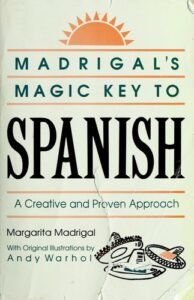
Madrigal's Magic Key to Spanish
by Margarita Madrigal
A classic beginner book that uses English-Spanish word patterns to grow vocabulary fast.

501 Spanish Verbs
by Christopher Kendris and Theodore Kendris
Full conjugation tables for the most common Spanish verbs, in every tense.
As an Amazon Associate we earn from qualifying purchases. Disclosure
¡Cállate!, ¡cállese!, ¡cállense!, ¡callaos!: which one, and how rude?
All four are command forms of the verb callarse, “to stop talking, to go quiet”. Which one you need depends only on who you are speaking to:
- ¡Cállate! to one person you call tú: a brother or sister, a friend, a child.
- ¡Cállese! to one person you call usted.
- ¡Cállense! to two or more people. In Latin America this is the only plural, for friends and strangers alike. In Spain it is the plural for people you would address formally.
- ¡Callaos! to two or more people you know well, in Spain only (the vosotros form).
- ¡Callate! (kah-YAH-teh, no written accent, stress on the second syllable) is the vos form you will hear in Argentina and Uruguay.
How rude is cállate? It depends on the voice and the relationship. Between brothers and sisters or close friends, ¡Cállate un momento! (“be quiet a second!”) is everyday talk, and a parent says it to a child without drama. Said sharply to someone you do not know well, it lands like “shut up”. Longer versions leave no doubt: ¡Cállate la boca! and ¡Cállate ya! are angry, and ¡Cierra el pico! (“shut your beak”) is plainly rude.
The usted form does not make the order polite. ¡Cállese! is formal in grammar only; it is what an angry person says to a stranger. If you would call someone usted (a teacher, a boss, an older stranger), do not use a command of callarse at all. Ask about the volume instead: Disculpe, ¿podría hablar más bajo, por favor? The differences between these command forms are laid out in formal vs informal commands in Spanish.
One more meaning to know: among friends in Mexico and some other countries, ¡Cállate! is also a cry of surprise, like “No way!” or “Shut up!” in English. “Me voy a casar.” “¡Cállate! ¿En serio?” (“I’m getting married.” “No way! Seriously?”) Nobody is being told to stop talking.
Polite ways to ask for quiet
Spanish speakers usually soften a request for quiet in one of three ways: they name the thing they want (silencio), they ask a question with poder (“can you …?”, “could you …?”), or they talk about the voice or the noise instead of the person.
| To one person (tú) | To one person (usted) | To a group | Meaning |
|---|---|---|---|
| Silencio, por favor. | Silencio, por favor. | Silencio, por favor. | Quiet, please. |
| Guarda silencio, por favor. | Guarde silencio, por favor. | Guarden silencio, por favor. | Please keep quiet. |
| Baja la voz, por favor. | Baje la voz, por favor. | Bajen la voz, por favor. | Lower your voice, please. |
| ¿Puedes bajar la voz? | ¿Puede bajar la voz? | ¿Pueden bajar la voz? | Can you lower your voice? |
| ¿Podrías hablar más bajo? | ¿Podría hablar más bajo? | ¿Podrían hablar más bajo? | Could you speak more quietly? |
| No hagas ruido, por favor. | No haga ruido, por favor. | No hagan ruido, por favor. | Please don’t make any noise. |
| ¿Te importa bajar la música? | ¿Le importa bajar la música? | ¿Les importa bajar la música? | Do you mind turning the music down? |
The group column uses ustedes, which works everywhere. Among friends in Spain you would use vosotros instead: guardad silencio, bajad la voz, ¿podéis bajar la voz?, no hagáis ruido.
Guardar silencio (literally “to keep silence”) is the standard formal phrase, the one printed on signs and used by teachers, librarians and hospital staff. In Latin America you will also hear hacer silencio: Hagan silencio, por favor. On signs and in announcements the impersonal form is usual: Se ruega silencio or Se ruega guardar silencio, “silence is requested”.
Starting with an apology makes any of these gentler: Perdona (to someone you call tú) or Disculpe (usted). See how to say “excuse me” in Spanish for the full set, and finish with gracias, as in thank you in Spanish.
Shh! in Spanish
The sounds for hushing someone are ¡chis! (also written ¡chist!) and ¡chitón!, and a plain ¡shh! is understood everywhere. ¡Chitón! is a little old-fashioned and often playful, like “hush!” or “not a word!”.
The verb behind it: callar and callarse
Callar means to say nothing or to stop making noise. The reflexive form callarse is the one you meet most: it means to stop talking, to go quiet. It is a regular -ar verb. In positive commands the pronoun is attached to the end of the verb; in negative commands it goes in front and the verb takes its subjunctive form.
| Person | Be quiet | Don’t go quiet / don’t stop talking |
|---|---|---|
| tú | cállate | no te calles |
| usted | cállese | no se calle |
| nosotros | callémonos (let’s be quiet) | no nos callemos |
| vosotros (Spain) | callaos | no os calléis |
| ustedes | cállense | no se callen |
Two spelling points. Callémonos drops the final -s of callemos before nos, and callaos drops the -d of callad before os; both changes are regular for reflexive verbs. Without the pronoun, the commands are calla (tú), calle (usted), callad (vosotros) and callen (ustedes). ¡Calla! on its own is common in Spain as a short “hush!”.
Outside commands, the verb is used like this:
| Spanish | English |
|---|---|
| Cuando entra la directora, todos se callan. | When the headteacher comes in, everyone goes quiet. |
| Me callé para no discutir. | I kept quiet so as not to argue. |
| ¿Por qué te callaste? | Why did you go quiet? |
| Los niños no se callan nunca. | The children never stop talking. |
| No me voy a callar. | I’m not going to keep quiet. |
| El público se calló cuando empezó la música. | The audience fell silent when the music started. |
| La profesora mandó callar a la clase. | The teacher told the class to be quiet. |
| ¿Puedes callarte un momento? | Can you be quiet for a moment? |
In the last sentence the pronoun is attached to the infinitive: callarte, not cállate. After poder, querer or ir a, Spanish needs the infinitive, and the pronoun changes with the person: ¿Puede callarse?, ¿Pueden callarse? How negative commands are built is explained in positive vs negative commands.
“Quiet” as an adjective: callado, tranquilo, silencioso
English uses one word, quiet, for a shy person, a calm street and a silent engine. Spanish splits these up, and choosing the wrong one is the most common slip.
| Spanish | Use it for | Example |
|---|---|---|
| callado / callada (kah-YAH-doh) | a person who is not talking, or who talks little | Mi hermano es muy callado. (My brother is very quiet.) |
| tranquilo / tranquila (trahn-KEE-loh) | a calm place, time or person; no bustle, no trouble | Vivimos en una calle tranquila. (We live on a quiet street.) |
| silencioso / silenciosa (see-len-SYOH-soh) | something that makes little or no noise | Este ventilador es muy silencioso. (This fan is very quiet.) |
| quieto / quieta (KYEH-toh) | still, not moving: a false friend | ¡Quédate quieto! (Keep still!) |
All four agree with the noun in gender and number: un niño callado, una niña callada, unos niños callados, unas niñas calladas. They follow the noun, as most Spanish adjectives do.
With callado, the choice between ser and estar changes the meaning. Es callada describes her character: she is a quiet person. Está callada describes this moment: she is being quiet, which may be unusual for her. So a friend might ask: Hoy estás muy callada. ¿Te pasa algo? (“You’re very quiet today. Is something wrong?”)
Tranquilo covers “quiet” in the sense of peaceful: un barrio tranquilo (a quiet neighbourhood), una noche tranquila (a quiet night), un día tranquilo en la oficina (a quiet day at the office). On its own, ¡Tranquilo! or ¡Tranquila! means “relax, calm down”, not “be quiet”.
Silencioso is about sound only: un motor silencioso (a quiet engine), una casa silenciosa (a silent house). For a person, silencioso means that he or she moves or works without noise; for someone who simply says little, callado is the word.
And quieto has nothing to do with noise. Estate quieto tells a child to stop wriggling; ¡Quieto! is what you say to a dog, or what a police officer shouts in a film: “Freeze!” A child can be quieto and noisy at the same time. Other adjectives for people and moods work the same way; compare happy and sad in Spanish.
Quiet, quietly and silence in everyday phrases
| English | Spanish | Note |
|---|---|---|
| silence; quiet (noun) | el silencio | masculine |
| peace and quiet | paz y tranquilidad | la tranquilidad is feminine |
| a quiet street | una calle tranquila | not quieta |
| a quiet voice | una voz baja / una voz suave | baja = low, suave = soft |
| to speak quietly | hablar en voz baja / hablar bajo | |
| to come in quietly | entrar sin hacer ruido | literally “without making noise” |
| to work in silence | trabajar en silencio | |
| to stay quiet, to say nothing | quedarse callado / quedarse callada | |
| to keep quiet about it | no decir nada | No digas nada. = Don’t say anything. |
| Don’t tell anyone. | No se lo digas a nadie. | |
| Quiet on set! | ¡Silencio, se rueda! | said before filming starts |
| Order in court! | ¡Silencio en la sala! |
What you would say, place by place
| Where | Spanish | English |
|---|---|---|
| Library (to a stranger) | Disculpe, ¿podría hablar más bajo? Estoy estudiando. | Excuse me, could you speak more quietly? I’m studying. |
| Cinema | Perdona, ¿puedes bajar la voz? No oigo la película. | Sorry, can you keep your voice down? I can’t hear the film. |
| Baby asleep | No hagas ruido, que el bebé está dormido. | Don’t make any noise, the baby is asleep. |
| Noisy neighbours | ¿Podrían bajar la música, por favor? Es muy tarde. | Could you turn the music down, please? It’s very late. |
| Start of a meeting | Un momento de silencio, por favor. Vamos a empezar. | A moment of quiet, please. We’re about to begin. |
| On the phone at home | Espera, baja la voz; estoy hablando por teléfono. | Hold on, keep your voice down; I’m on the phone. |
| Exam room | Silencio durante el examen. | Silence during the exam. |
| Hospital | Por favor, guarden silencio. Hay pacientes descansando. | Please keep quiet. There are patients resting. |
| A surprise party | No digas nada. Es una sorpresa. | Don’t say anything. It’s a surprise. |
| Brother to brother | ¡Cállate un momento, que no oigo! | Be quiet a second, I can’t hear! |
If someone asks you to be quiet, the usual answers are Perdón or Lo siento (“sorry”), and with friends Vale, ya me callo in Spain or Está bien, ya me callo elsewhere: “OK, I’ll be quiet now.” The little word vale is covered in how to say OK in Spanish.
Sayings about keeping quiet
- En boca cerrada no entran moscas. “Flies don’t get into a closed mouth”: sometimes it is wiser to say nothing.
- Quien calla, otorga. “Whoever stays silent, consents”: silence is taken as agreement.
- No decir ni pío. “Not to say a peep”: No dijo ni pío en toda la cena. (He didn’t say a word all through dinner.)
- Soy una tumba. “I’m a tomb”: your secret is safe with me.
Two short dialogues
In a classroom (Latin America, so the teacher uses ustedes)
| Speaker | Spanish | English |
|---|---|---|
| Profesora | Chicos, silencio, por favor. Vamos a empezar. | Quiet, please, everyone. We’re going to start. |
| Profesora | Diego, Lucía, ¿pueden guardar silencio? | Diego, Lucía, can you keep quiet? |
| Diego | Perdón, profe. | Sorry, miss. |
| Profesora | Gracias. Abran el libro en la página veinte. | Thank you. Open your books at page twenty. |
| Lucía | (en voz baja) ¿Qué página dijo? | (quietly) What page did she say? |
| Diego | La veinte. ¡Chis! Habla más bajo. | Twenty. Shh! Keep your voice down. |
Notice that the teacher never says cállense. She asks for silencio and uses a question, which keeps the tone calm. The pupils speak to each other with tú forms (habla) and to the teacher with an apology, not a command.
At home (a mother and her son, tú)
| Speaker | Spanish | English |
|---|---|---|
| Madre | Baja la voz, por favor. Tu hermana está durmiendo. | Keep your voice down, please. Your sister is sleeping. |
| Hijo | Pero si no estoy gritando. | But I’m not shouting. |
| Madre | Ya lo sé, pero la tele está muy alta. Baja el volumen. | I know, but the TV is very loud. Turn the volume down. |
| Hijo | Está bien. ¿Así? | All right. Like this? |
| Madre | Así está mejor. Gracias. | That’s better. Thank you. |
| Hijo | ¡Mamá, mamá, mira esto! | Mum, Mum, look at this! |
| Madre | ¡Chis! No hagas ruido, que se despierta. | Shh! Don’t make any noise or she’ll wake up. |
Mistakes English speakers make
| Not this | Say this | Why |
|---|---|---|
| Sé quieto. / Estate quieto. (for “be quiet”) | Cállate. / Guarda silencio. | Quieto means still. Estate quieto is correct Spanish, but it means “keep still”. |
| un barrio quieto | un barrio tranquilo | A quiet place is tranquilo. |
| Mi hermana es muy silenciosa. (she doesn’t talk much) | Mi hermana es muy callada. | Callado is the word for a person of few words. |
| ¿Puedes cállate? | ¿Puedes callarte? | After poder, use the infinitive with the pronoun attached. |
| No cállate. | No te calles. | A negative command puts the pronoun first and changes the verb ending. |
| Cállese, por favor. (meaning to be polite) | ¿Podría hablar más bajo, por favor? | Cállese is an order even with por favor. |
| Callaos. (to a class in Mexico or Colombia) | Cállense. / Guarden silencio. | Latin America does not use vosotros. |
| Silencio! / Puedes bajar la voz? | ¡Silencio! / ¿Puedes bajar la voz? | Spanish opens exclamations with ¡ and questions with ¿. |
Practice
A. Choose the better option
- Your little brother keeps talking during a film: Cállate un momento. / Cállese un momento.
- A teacher in Mexico speaks to the whole class: Callaos. / Guarden silencio.
- You ask a stranger on a train, politely: ¡Cállese! / ¿Podría bajar la voz, por favor?
- You want a child to keep still for a photo: Estate quieto. / Estate callado.
- A quiet neighbourhood: un barrio quieto / un barrio tranquilo
- “Don’t go quiet” (to a friend): No cállate. / No te calles.
- To a group of friends in Madrid: Callaos. / Cállese.
- A quiet washing machine: una lavadora silenciosa / una lavadora callada
B. Put into Spanish
- Quiet, please.
- Can you lower your voice? (to a friend)
- My sister is a very quiet person.
- Don’t make any noise. (to a friend)
- Don’t tell anyone.
- Be quiet, all of you! (Latin America, blunt)
- We live on a quiet street.
- Why did you go quiet?
Answers
A. 1. Cállate un momento. 2. Guarden silencio. 3. ¿Podría bajar la voz, por favor? 4. Estate quieto. 5. un barrio tranquilo 6. No te calles. 7. Callaos. 8. una lavadora silenciosa
B. 1. Silencio, por favor. 2. ¿Puedes bajar la voz? 3. Mi hermana es muy callada. 4. No hagas ruido. 5. No se lo digas a nadie. 6. ¡Cállense! 7. Vivimos en una calle tranquila. 8. ¿Por qué te callaste?
Quick answers
What is “quiet” in Spanish?
It depends on what is quiet. A person who is not talking is callado or callada; a calm place is tranquilo; a machine or a room without noise is silencioso. The noun, as in “peace and quiet”, is el silencio or la tranquilidad.
What does “cállate” mean?
“Be quiet” or “shut up”, said to one person you address as tú. It comes from callarse, to stop talking. Among friends in some countries it can also mean “no way!”.
Is “cállate” rude?
Not always. With family and close friends it is ordinary, and tone decides the rest. To a stranger, a teacher or a boss it is rude, and so is the formal cállese. Ask ¿Podría hablar más bajo? instead.
How do you say “be quiet” politely in Spanish?
Silencio, por favor to anyone; ¿Puedes bajar la voz? to a friend; ¿Podría hablar más bajo, por favor? to a stranger; Guarden silencio, por favor to a group.
How do you say “be quiet” to a group?
Cállense (blunt) or Guarden silencio (polite) in Latin America and in formal situations in Spain; Callaos or Guardad silencio to friends or children in Spain.
Does “quieto” mean quiet?
No. Quieto means still: Estate quieto is “keep still”. It is one of the best-known false friends between Spanish and English.
More everyday words and the grammar behind them are collected in the Spanish vocabulary hub.